Plasterers in Lowestoft, Suffolk
Plasterers in Lowestoft and the surrounding areas: free quotes, and we ring you back at a time that suits you
Every kind of plastering job is covered, large or small. Complete the short form and pick when you would like the call back. At that time a local plasterer will ring you and give you a free quote. Asking is free.
- Free to ask, and no pressure to say yes
- One wall, one ceiling or the whole house
- North and south of the bridge, plus Beccles and the villages
- You pick the time for the call back
Walls and ceilings that need plastering
Good plaster is invisible. You paint it, hang a picture on it and never think about it again.
Bad plaster is the opposite. Low sun through the window picks out every ripple. The crack over the door has been filled three times and is back again. Knock on the chimney breast and one patch sounds like a drum. And the lounge ceiling still wears the swirls somebody combed on in 1978.
You can paint over all of it. People do, year after year. The paint goes on and the lumps stay put, because paint only colours what is underneath.
A plasterer changes what is underneath. A few millimetres of fresh finish, laid flat and polished, and the room is ready for any colour you like. Fill in the short form, say which rooms and roughly how big, and a plasterer who works in Lowestoft will call you back with a price.
How to get your price
Describe the walls
Put in who you are, a number to ring and your part of town. Then say which rooms need work and what you can see there: cracks, a pattern on the ceiling, a hollow patch.
A Lowestoft plasterer phones you
A plasterer who works in your part of town rings when you said would suit. They will want sizes, and to know what is on the walls now. For most jobs they then come and look.
You get a figure and decide
The plasterer tells you what the work will cost. Get that in writing and take as long as you need. If it is not for you, you say no and pay nothing.
What sea air and old houses do to plaster in Lowestoft
Lowestoft is the most easterly town in Britain, and it sits right on the North Sea. Wind, rain and salt from the sea are hard on the walls of a house.
Wind off the sea drives rain at walls that face east. Where rain gets into brickwork, it carries salts through to the inside as the wall dries. Those salts push plaster off from behind. You see it as bubbling paint, a white furry bloom, or plaster that turns to powder when you press it.
The town has had the sea indoors as well. The flood of January 1953 covered most of the southern town, and a storm surge in December 2013 flooded homes again. Plaster that has been soaked in salt water can go on drawing damp out of the air long afterwards.
Then there is age. South Lowestoft was laid out as a Victorian seaside resort after the railway came in 1847, and the terraces and seafront houses of Kirkley date from those years. Houses of that age were plastered with lime on to brick, with ceilings of lime plaster on thin wooden laths. Both last well until they are disturbed or get wet. Then they crack, sag and come away.
Newer homes on the edges of town have plasterboard walls and ceilings. Their faults are different: popped screw heads, cracked joints, and corners knocked about by family life.
A plasterer who works here sees all of these in a normal month. Tell them the age of the house and which way the bad wall faces. It helps them guess the cause before they arrive.
Skim, patch or replaster: the three kinds of plastering job
Nearly every plastering job comes down to one of three things.
Working out which of the three you need is not your job. Tap the wall with your knuckles. A dull, solid knock is good news. A hollow rattle means the plaster has let go of the wall behind it. Say what you hear in the form and the plasterer will take it from there.
A skim
A skim is a thin coat of finishing plaster, two or three millimetres thick, spread over a wall or ceiling that is basically sound. It hides old filler, hairline cracks, the ghost of stripped wallpaper and a rough paint finish. Most rooms that look tired need this and no more. See wall skimming in Lowestoft.
A patch
Where one area has blown, been cut out for a pipe or cable, or been spoiled by a leak, the loose part is taken back to something solid and filled level with the wall around it. Done well, you cannot find the join once it is painted. Our page on plaster repairs explains when a patch is enough.
A full replaster
If plaster is loose across a whole wall, or damp and salts have got into it, a skim on top will not hold. The old plaster comes off and the wall is built back up with a base coat and a finish, or lined with plasterboard. This is replastering. More labour and more mess go into it, so the bill is higher.
Plastering prices from the published guides
It is easier to pick up the phone with a rough number in your head. The figures below are typical UK prices from published UK cost guides.
| Job | UK guide price |
|---|---|
| Plaster patch repair | £100 to £300 |
| Plastering one wall | £250 to £400typical about £310 |
| Skimming a medium room, walls and ceiling | £600 to £850 |
| Skimming a medium ceiling, around 15 square metres | £280 to £440 |
| Plastering over a textured ceiling with no asbestos | £250 to £700 |
| Rendering a 3-bedroom semi in basic lime or cement render | £4,200 to £5,500 |
These figures are UK guide prices lifted straight from UK cost guides, so use them for a rough idea and never as a quote. The state of your walls, the height of the room and how easy it is to get at the work all move the figure.
A whole room done in one visit nearly always costs less per wall than four walls done one at a time. The UK plastering guide makes the same point: about £300 for one wall, about £630 for a room of four.
Plastering work people in Lowestoft ask for
- Skimming. Tired, scarred or uneven walls given a new flat face, one room or the whole house. See wall skimming.
- Replastering. Loose, sandy or damp-spoiled plaster taken off and the wall plastered afresh. See replastering in Lowestoft.
- Ceilings. Cracked, stained and sagging ceilings skimmed, boarded over or renewed, old lath and plaster included. See ceiling plastering.
- Artex. Swirls, stipple and peaks tested, then covered or taken off. See artex ceilings.
- Repairs. Blown patches, cracks, holes and the channels left by an electrician. See plaster repairs.
- Rendering. Outside walls patched or coated again to keep the weather out. See rendering in Lowestoft.
- Plasterboard. Stud walls, loft rooms, extensions and cold walls lined and skimmed. See plasterboarding and dry lining.
- Coving and cornice. Plain coving run round a room, or a broken length of old cornice matched in. A UK coving guide puts standard plaster coving at £40 to £100 a metre, supplied and fitted. Mention it in the form with the rest of the job.
What a plasterer charges for a day
Most plasterers price the job, not the hour. Behind that price is a day rate, and it helps to know roughly what it is.
A UK plastering cost guide gives an average day rate of about £180 to £250 for a plasterer, and £25 to £40 an hour. Its regional table lists London and the south east at £250 to £350 or more, the Midlands at £200 to £275 and the north of England at £180 to £250. There is no line for the east of England, so nobody can hand you a published figure for Lowestoft.
The same guide says most tradesmen have a minimum charge for small jobs, of at least £50 plus materials. That is why one small patch can seem dear for the time it takes. The plasterer still has to load the van, mix a bucket, wait for the plaster to firm up and go back over it.
Our article on plasterer day rates goes through what a day rate pays for and how to weigh one price against another.
What to expect on the day and while the plaster dries
Plastering is wet, messy work, and it is better to know that before the van pulls up.
- Before. Furniture comes out, or goes into the middle of the room under sheets. Floors are covered. Radiators may need lifting off so the wall behind can be done. A UK skimming guide puts a plumber's charge for taking off and refitting a radiator at £80 to £250, so ask if the plasterer will do it.
- During. The plasterer needs clean water, somewhere outside to mix and wash out, and a clear run from the door to the room. A skim goes on in two thin coats and is trowelled several times as it firms up. Once a wall is on, the plasterer cannot stop for long, so save your questions for the tea break.
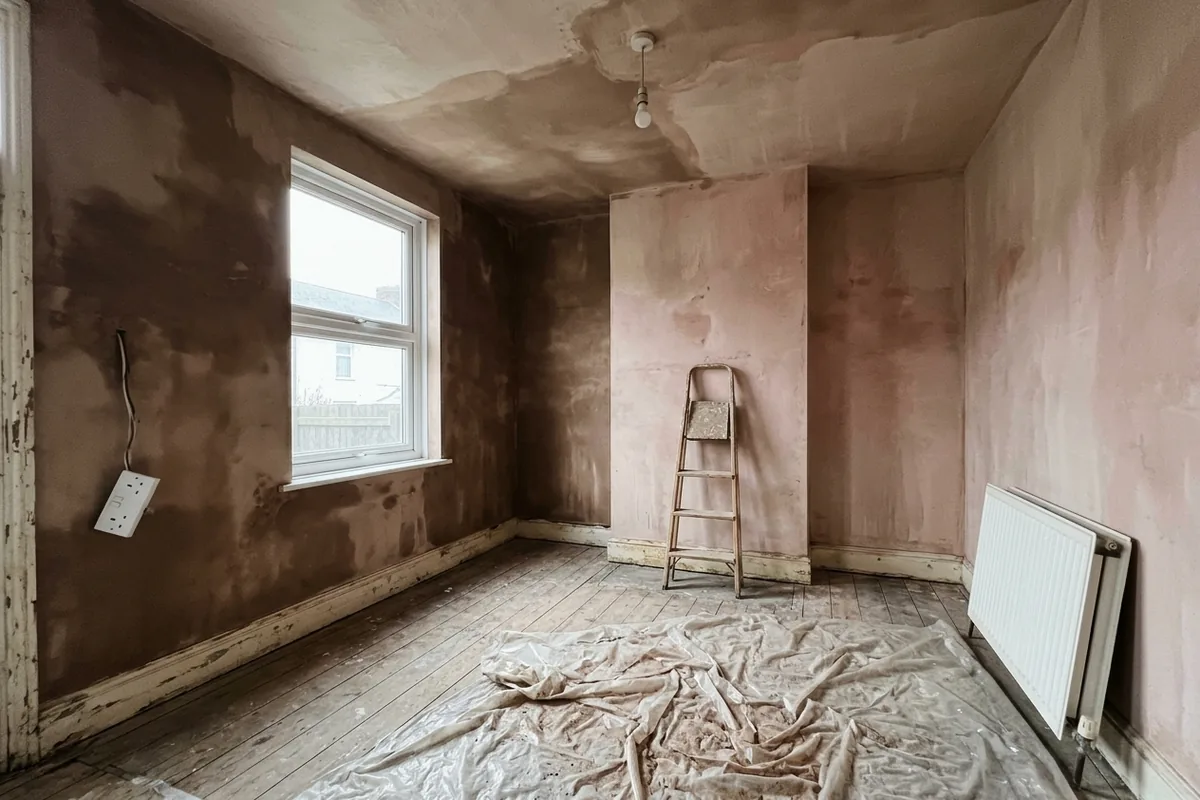
- After. New plaster begins dark brown and dries to a pale pink. The same guide says plaster usually takes three to seven days to dry. Keep the room aired and gently warm. Do not blast it with heaters, as plaster dried too fast can crack.
Paint has to wait until the colour is even all over. Our guide to painting new plaster explains the thinned coat that goes on first, and why skipping it makes paint peel.
Five things to put in the form
- Which rooms, and walls, ceilings or both.
- Rough sizes. Paces will do: four by three is plenty to go on.
- What is on the surface now: bare plaster, paint, wallpaper, tiles or a textured coating.
- Any damp, staining or hollow patches you have found.
- The age of the house if you know it, and when you would like the work done.
With that, the plasterer who rings can often give you a rough figure on the phone and a firm price after a look. If you are comparing people, our guide to choosing a plasterer in Lowestoft lists what to ask.
Both sides of Lake Lothing, and the villages around
Lake Lothing cuts Lowestoft in two. The northern half of the town, with the High Street, Gunton and Oulton, sits on what is called the island of Lothingland. Kirkley, Pakefield and Carlton Colville lie to the south. Road bridges join the two halves, and they lift to let boats through.
Anyone local plans their day around those bridges, and plasterers are no different. A job on their own side of the water is easier to fit in. So give your area on the form, and expect the call from someone who works close by.
Help is on hand for the coast villages too: Corton to the north, Kessingland to the south, and inland to Blundeston, Somerleyton and Beccles. The whole list is on the areas covered page.
Plastering services in Lowestoft
- Wall skimmingA thin, flat coat of new plaster over tired walls.
- ReplasteringOld plaster off, new plaster on, room by room.
- Ceiling plasteringCracked, sagging and stained ceilings skimmed or renewed.
- Artex ceilingsSwirls and stipple covered, skimmed flat or removed.
- Plaster repairsBlown patches, cracks, holes and leak damage made good.
- RenderingCracked or tired outside walls patched and rendered again.
- Plasterboarding and dry liningNew walls and ceilings boarded, taped and skimmed.
Parts of Lowestoft and nearby
Plastering help for the whole town, north and south of the water, and for these places around it.
- Town centre and north Lowestoft
- Kirkley
- Pakefield
- Oulton Broad
- Oulton
- Carlton Colville
- Gunton
- Corton
- Kessingland
- Gisleham
- Blundeston and Somerleyton
- Lound and Hopton-on-Sea
- Beccles
Worth knowing before you ask
- It is free. Sending the form costs nothing, and neither does the call that follows. You can turn the price down.
- It is short. Four things: who you are, a phone number, whereabouts you live and what needs plastering. We do not ask for an email or a door number.
- The prices come from published guides. Any figure on this site comes from a published UK cost guide. They are there to give you a rough idea. Only a plasterer who has seen your walls can give you a quote.
- Nothing else happens to your details. A plasterer needs them to ring you about your walls. That is their only use, and no one buys or sells them.
Common questions
How much do plasterers cost?
It depends on the job. Published UK cost guides put a patch repair at £100 to £300, one wall at £250 to £400, and skimming the walls and ceiling of a medium room at £600 to £850. A plasterer's day rate averages about £180 to £250 across the UK according to the same source. These are published guide figures. Your own price comes from a plasterer who has seen the room.
How long does it take a plasterer to do a wall?
A UK cost guide allows two to four hours for a patch repair and one day for a small room. A single wall usually sits somewhere between. The plaster goes on in two coats and has to be worked as it sets, so even a small wall keeps the plasterer there for a good part of the day.
Do I pay for the quote or the phone call?
No, neither one. You pay nothing for the form, the phone call or the look round. A price you do not like can simply be turned down.
Can a plasterer work in a house we are living in?
Yes, most jobs are done in lived-in homes. One room at a time is the usual way. You lose that room for a day or two while the work is done, and it stays damp for several days after. Kitchens and bathrooms need a bit more planning, so mention them.
Is help available south of the harbour as well as north?
Yes. Kirkley, Pakefield, Carlton Colville and Oulton Broad are covered just the same as the town centre, Gunton and Oulton. So are Corton, Kessingland, Blundeston and Beccles. Just name yours when you ask.
Will the plasterer take the rubbish away?
Ask when you get the price. Bags of old plaster are heavy, and getting rid of them costs money. A UK plastering guide says waste disposal may add £50 to £150 to a job. A clear quote says who is dealing with it.
Ask for your free plastering quote
Loose plaster does not mend itself. A hollow patch grows each time a door slams, and a ceiling that has begun to sag will keep sagging. Damp behind plaster keeps damaging the wall while you decide. Good plasterers also get booked up, so the date you want goes to whoever asks first.
Finding out the price is free. Say which rooms and where in Lowestoft you are.